Natural Apiary Without Sugar Water or Treatments and Simple Management for a Thriving Colony
You see a honey bee on a flower….wonder where they’re headed, turning all that nectar into honey? I wanted to have a colony and a natural apiary, but do I buy bees shipped to me, or maybe I can buy locally? Are bees hard to manage? Do I have to treat for pests? What about the queen?…And those vertical boxes look so heavy…Surely it’s simple since bees have been storing honey on their own for years before we interfered.
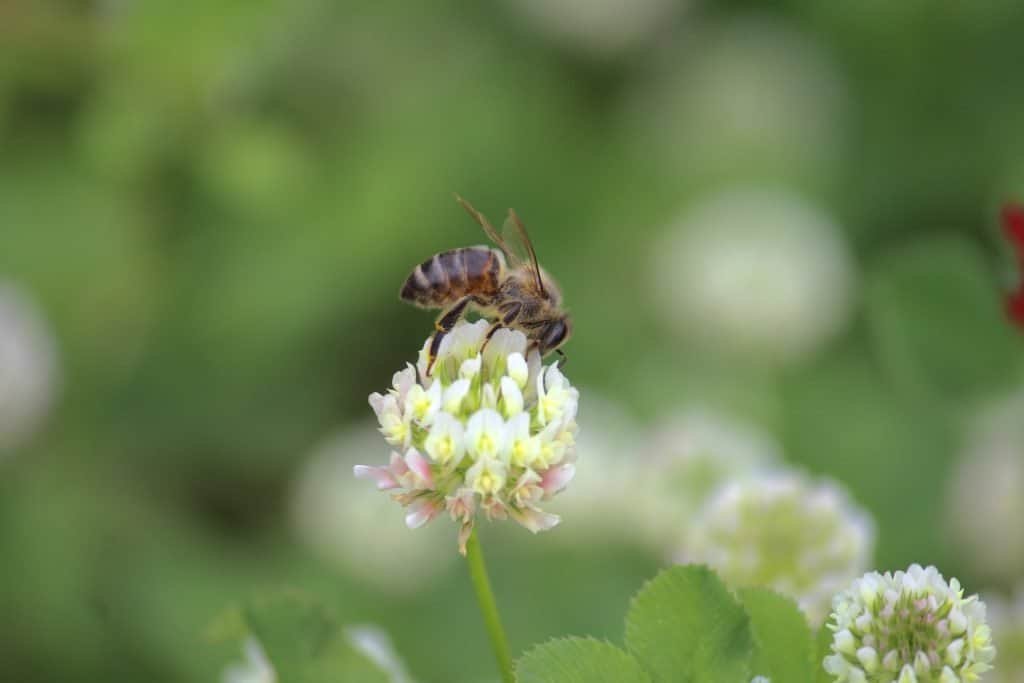
Finding out how we could manage them like a wild colony, benefit our family, and be as simple as possible was very important to us.
Our journey…
When moving to our farm in 2018, one of the first homeschool lessons was beekeeping. I was very interested, but at the time, it seemed a little hard to do with all the new things we were doing. And the conventional way seemed hard for me.
I wanted to avoid…
- treatments for varroa mites
- sugar water
- buying bees
- vertical hive boxes
These are common practices for many beekeepers.
So bees were put on hold….But I kept thinking about it and wanted to devote some time researching a natural apiary.
Fast forward a few years….Being a part of a homestead community, one of the teachers taught a class on Natural and Sustainable Beekeeping by Adam Martin of BeeKept. A great book and an easy read to get started is Bee Kept with Wild and Free Honey Bees by Adam Martin. Check out my review of his book.
We were so excited to start this journey…This was exactly what I was looking for.
One of the first steps to a natural apiary is to try to catch a swarm…
What is a swarm?
Each year, the colony grows a new queen and kicks out the old queen with over half of the colony. So the smaller colony is looking for a new home to expand. Why not yours? You’ll have honey harvest and great pollinators for your garden.
These feral bees are acclimated to your area and are stronger. And they have already survived a winter. If you cannot catch a local swarm, consider buying locally. But a swarm is….FREE!
How to catch a swarm
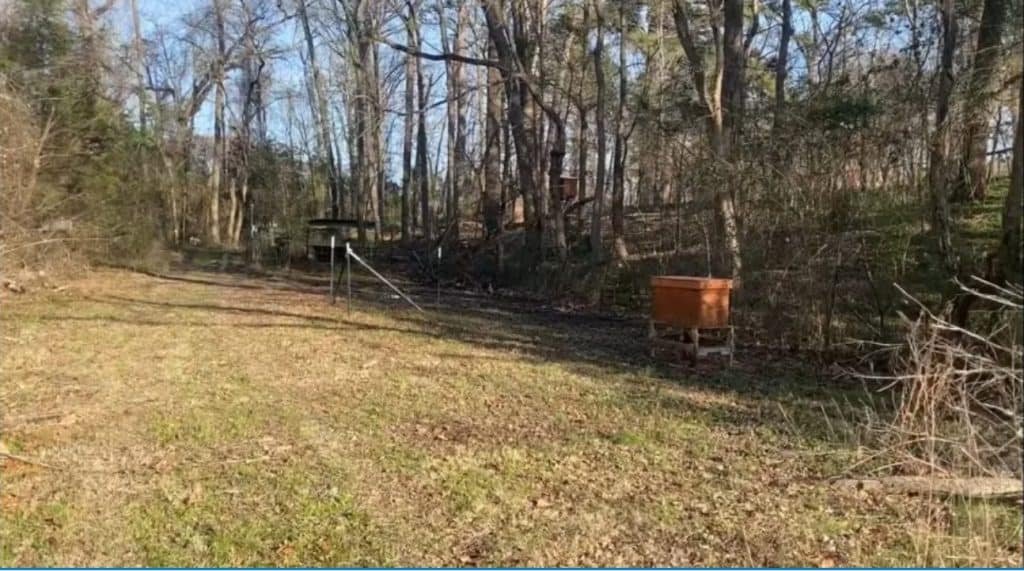
Building a trap with frames and adding bait (tubes filled with lemongrass) may draw those swarming bees to your backyard. The scent mimics the queen. Strap in a tree at least 4ft above the ground. Research when the swarm season happens in your area.

Ten days after you’ve caught a swarm, then transfer the frames to the hive, and the returning forager bees will find their new home. The hive should be placed up to 15ft from where you caught the swarm.
When you remove the lid, the frames are placed horizontally across the hive. Checking for brood is easy without disturbing multiple boxes that are heavy to manage. Horizontal makes so much sense. The bees are calmer, too, because you’re not disturbing them as much.
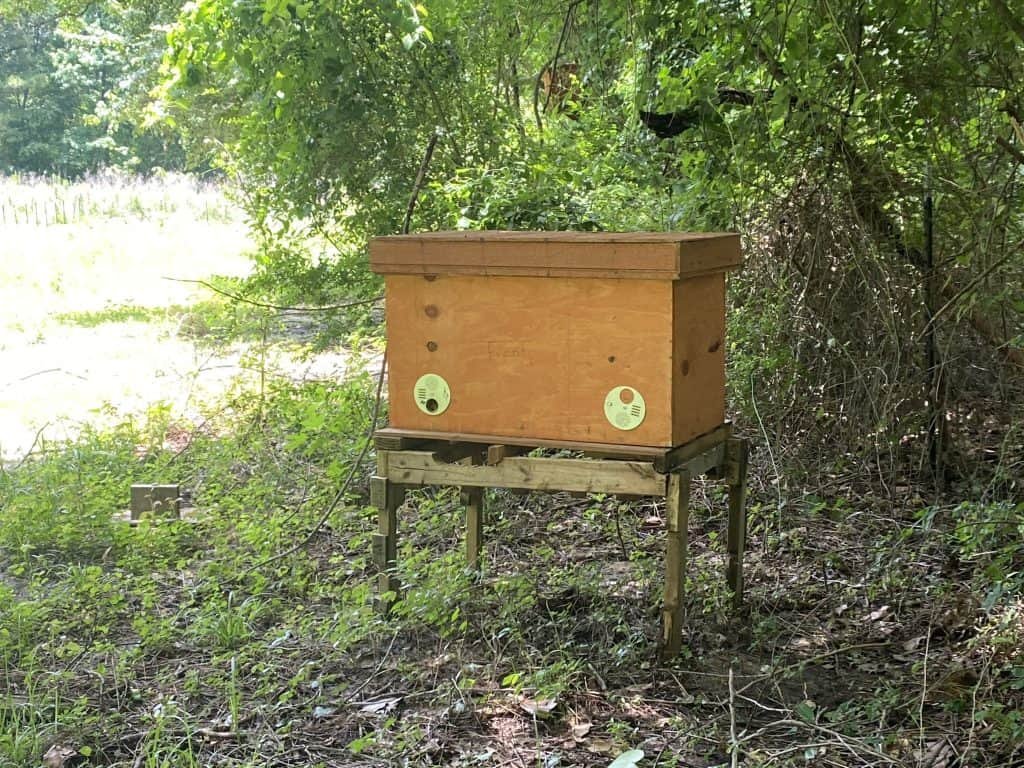
Leo Sharashkin’s site Horizontal Hive has plans for swarm traps and hives. He also edited the book Keeping Bees with a Smile, by Fredor Lazutin. Also, The Practical Beekeeper by Michael Bush. Also, check out Adam Martin of BeeKept with plans and a book about natural beekeeping.
What does “apiary” mean?
Where the beehives of honey bees are kept, also known as a bee yard.
Managing Bees with a Simple Approach
When we were building frames, we didn’t know to add a starter strip. It’s a thin piece of wood at the top of the frame. The bees need a strip at the top of the frame so they will build it “correctly,” so the frames are easily removed for harvest. Our bees built a natural comb, attaching 6 frames.
We let the bees be bees and forage, knowing that come spring, we’ll have to make sure the bees go the correct way when they’re foraging again..
Our colony survived the first winter. Happy to see them do so well, and I was very relieved knowing they were free. When you get packaged bees that have been shipped, they may not survive the winter since they’re not acclimated to your area.
You can feed them good local honey if you know the beekeeper doesn’t treat their bees, if you’re striving for natural beekeeping practices.
If you catch a swarm late in the season, feed them honey to get through the winter because they won’t have had time to build up resources for the winter.
And catching a swarm doesn’t guarantee they’re strong. If they’re from a local apiary, they may have been fed sugar water and treated for pests, so they may not survive our natural approach and their weakened immune systems.
As spring approached, we set out our traps again and caught four more swarms! Those five colonies would have cost me about $1000!
Additionally, our first bees were busy collecting resources and building natural comb. You can purchase plastic frames that are ready for the bees to fill. But we let them build a natural comb… but down the frame.
I had to add starter strips to the frames. We also added wax foundation sheets down the entire frame to help them build out the rest of the frames “correctly” for me, so we could harvest that honey! Adam Martin has been my mentor and a great help to us.
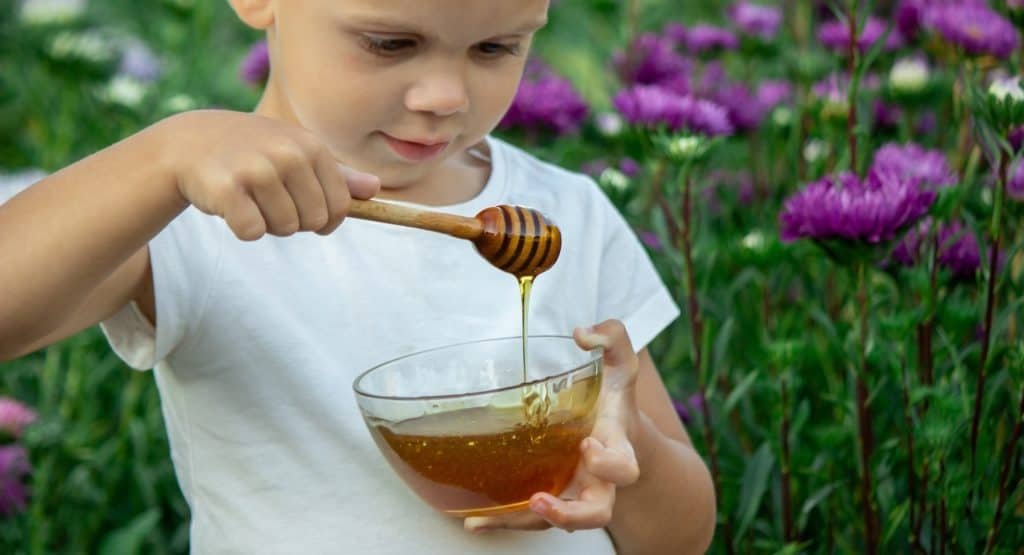
The joy of pulling out a heavy frame filled with honey from our first colony was truly a joyful harvest! The flavor was amazing! I have never tasted honey so good. No aftertaste, just sweet and amazing all the way…..We harvested over 2.5 quarts from one frame.
Although I cannot control the sprays around my farm, nor where the bees forage in their 3-mile radius. But, I know that I’m doing it as naturally as possible without….
- treatments for varroa mites,
- giving them sugar water,
- cutting the queen cells, which prevents them from swarming
- continuous management…and there’s a lot in conventional beekeeping.
There are basic tasks to manage even with my hands-off approach, and though my beekeeping approach is different, natural beekeeping makes sense to me.
Basic Apiary Management
First year
- Catch a swarm.
- Move frames to the hive in 10 days.
- Give them a couple more frames,
- add a follower board/divider board, and fill the hive with frames.
- Let the bees be bees-no extraction first year colonies
- watch for dearth..dry conditions in summer.
- Don’t open the hive.
- Turn the disc entrance hole half closed so they can defend their hive as other colonies might try to rob them.
- Bees will forage again during the fall if it rains and there are fall plants.
- Winterize before the first freeze-
- flip to the divider board and tuck them in for the winter.
- Take out frames.
- Close the main entrance to the slats and the second entrance to the mouse guard.
Second year
- In the spring,
- flip the board as a follower board
- add frames back for expansion
- Let the bees be bees and forage. Harvest honey! yay!
- Watch for dearth..
- dry conditions in summer when local plants for nectar aren’t available.
- Don’t open the hive during the dearth.
- Turn the disc entrance hole to half closed.
- Bees will forage again during the fall if you have good fall rain and good plants…harvest again
- Watch for dearth….if there’s good fall rain and fall plants, then bees will forage again…harvest again.
- Winterize again before the first freeze!
These are my basic management instructions for my colonies. There are more details inside some of those tasks, but this is a basic routine.
Basic tools for traps and a hive
- swarm trap choose style langstroth or layens
- frames, langstroth, or layens
- lures
- lemongrass
- J hook tool
- smoker and fuel-we use burlap
- bee suit with veil
- hive langstroth or layens style vertically or horizontally
- extractor
- strainer and sieve
- uncapping tool
- jars
These supplies and plans are available from Horizontal Hive, BeeKept, and other beekeeping supply shops.
Adam Martin’s class on School of Traditional Skills was the perfect class for learning how to catch a swarm and manage a natural apiary. He also offers a monthly online BK Bee Club to learn more about natural beekeeping. Maybe I’ll see you there.
It’s time to start or transition to a natural apiary. Set up a swarm trap and try catching some free bees, and let the Bees be Bees! When you see a bee on a flower, you’ll know your bees are busy turning that nectar into honey, and in fact, that honey bee might even be yours!
Happy Natural Beekeeping!